The future of healthcare is at home
Like this content? Share with your friends and followers!
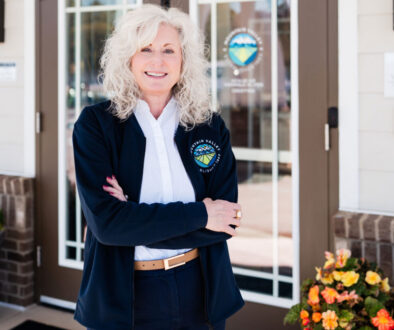
By Tracey Dobson, MSN, RN, President & CEO, Mountain Valley
If you ask most people where they would prefer to receive medical care, I think many would tell you the same thing: at home. There’s something about being in your own home, surrounded by familiar things and the people you love, that brings a sense of comfort and security. And when you’re facing a serious illness, those things can become even more important.
That’s why I’m encouraged by some of the changes we’re seeing in healthcare today. Increasingly, medical care that once required a hospital stay can be provided in a patient’s home. Even some patients with complex medical needs are now able to receive hospital-level care without being admitted to a hospital. I think that’s an exciting development. And I believe it creates an important opportunity for organizations like Mountain Valley.
Recently, Kristie Szarpa, one of our leaders at Mountain Valley, shared some thoughts about this shift and what it could mean for the future of serious illness care. I appreciate Kristie’s perspective because she reminds us that as healthcare evolves, we need to make sure we don’t lose sight of the whole person.
When we talk about bringing more medical care into the home, it’s easy to focus on the clinical side of things. What treatments can be provided? What technology will be needed? How can we safely deliver increasingly complex care outside of a hospital?
Those are all important questions. But I think there’s another question that deserves just as much attention: How do we make sure we’re caring for the person, not simply treating the illness?
That’s where serious illness care, also known as palliative care, has such an important role to play.
Palliative care focuses on helping people manage the symptoms, challenges and stresses that come with serious illness. It also means listening to patients, understanding their goals, supporting their families and helping them navigate difficult decisions. And importantly, palliative care can be provided alongside treatments intended to cure or manage an illness.
As Kristie points out, hospitals often have palliative care teams that help bring this perspective into a patient’s overall treatment plan. As more care moves into the home, we have an opportunity to bring that same support to patients and families earlier in their healthcare journey.
Imagine being able to receive the medical treatment you need at home while also having a team that takes the time to ask how you’re feeling, what matters most to you and what additional support might make life a little easier.
That’s the kind of care I hope we continue moving toward.
At Mountain Valley, we’ve always believed that good care begins with listening. We can have all the medical knowledge and technology in the world, but if we haven’t taken the time to understand what a patient wants and needs, we’re missing something important.
I also believe this evolution in healthcare will require greater collaboration among providers. No single organization can meet every need a patient or family may have. Working together, sharing our expertise and keeping the patient’s goals at the center of our decisions will become increasingly important.
Kristie is right that the future holds some exciting possibilities. We don’t know exactly how healthcare in the home will evolve, but I hope we’ll continue to see more opportunities to bring compassionate, whole-person care to people wherever they are.
Because at the end of the day, it’s not just about where healthcare happens.
It’s about how we care for people, how well we listen and whether we’re helping them live as fully and comfortably as possible.
And if we can do more of that in the place people most want to be—home—I think that’s a future worth working toward.