Types of dementia and how they affect hospice care
Like this content? Share with your friends and followers!


A dementia diagnosis can bring many questions for patients and families. What changes should we expect? How will care needs evolve? And when might hospice become an appropriate source of support?
One important place to begin is understanding that dementia is not a single disease. It is an umbrella term for conditions that affect memory, thinking, reasoning, behavior, communication, and a person’s ability to complete everyday activities. Alzheimer’s disease is the most common type, but there are several others, and each can affect a person differently. (Read more: National Institute on Aging)
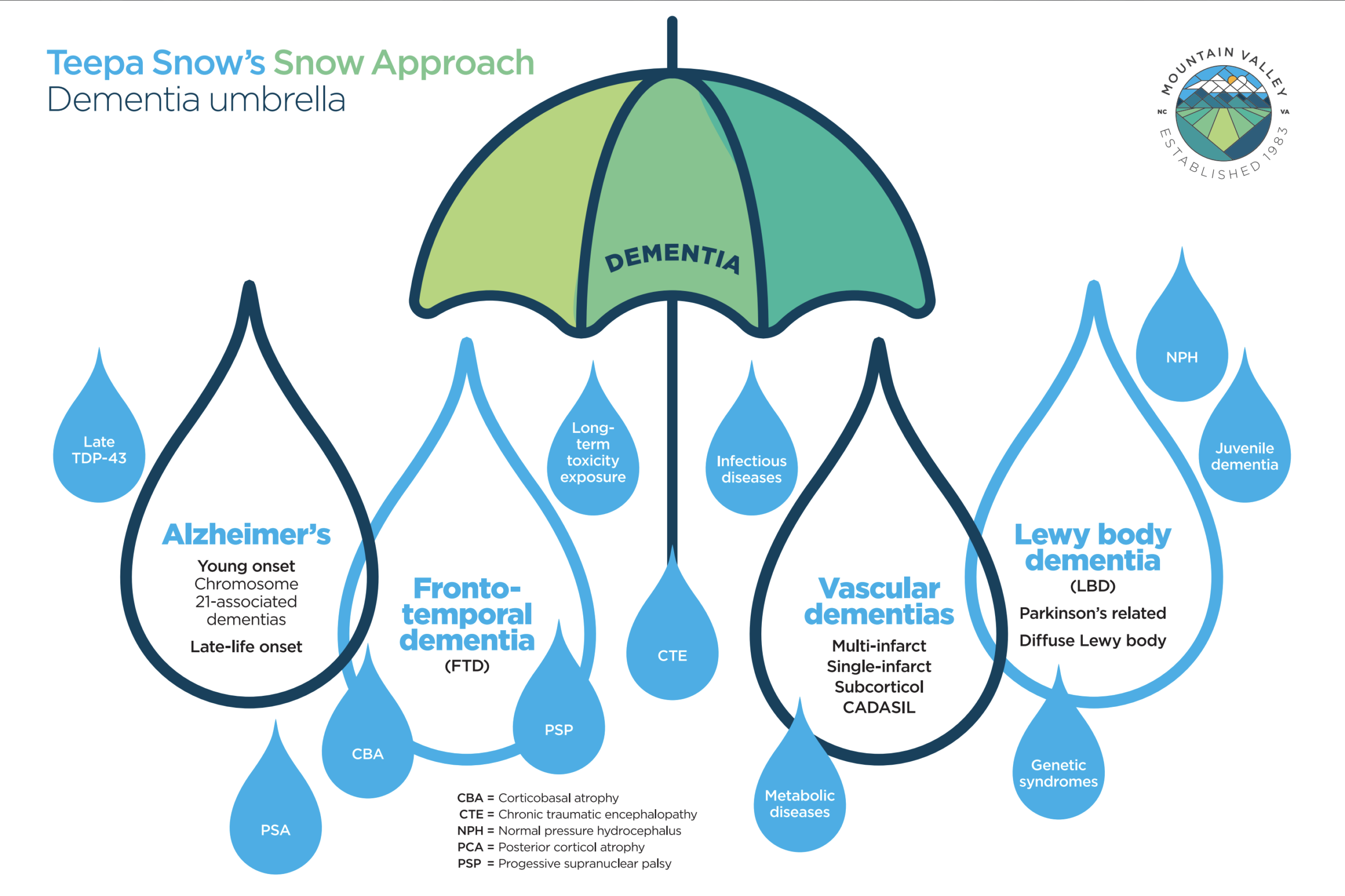
Those differences can also influence hospice care. A person with Alzheimer’s disease may have needs that differ from someone living with Lewy body dementia, vascular dementia, or frontotemporal dementia. Understanding the diagnosis helps the hospice team anticipate symptoms, communicate more effectively, support caregivers, and create an individualized plan focused on comfort and quality of life.
At Mountain Valley, dementia care is personal. Our goal is to support the whole person and the people who love them, helping families navigate serious illness with skilled care, compassion, dignity, and meaningful connection.
Types of Dementia: Click each bar to learn more
How does the type of dementia affect hospice care?
Knowing the type of dementia provides useful information, but the diagnosis alone does not determine the hospice plan.
Two people with the same type of dementia may have very different symptoms and abilities. Hospice care therefore begins with an assessment of the individual and evolves as needs change.
For someone with advanced dementia, hospice support may include:
- Management of pain and other distressing symptoms
- Nursing care and ongoing assessment
- Assistance with personal care
- Guidance related to eating, swallowing, skin care, positioning, and mobility
- Support for anxiety, agitation, or changes in behavior
- Medical equipment and medications related to the hospice diagnosis, when appropriate
- Social work and spiritual care
- Education and support for family caregivers
- Respite options when appropriate
- Grief and bereavement support for loved ones
Mountain Valley uses a multidisciplinary team that can include physicians or nurse practitioners, nurses, nursing assistants, social workers, hospice chaplains, and volunteers. The team works together to develop a personalized care plan that addresses physical needs while also recognizing emotional, social, and spiritual concerns.
Learn more about Mountain Valley’s hospice care services.
When is someone with dementia eligible for hospice?
Families often wonder whether dementia itself qualifies someone for hospice.
Hospice eligibility is based not simply on having dementia but on how advanced the illness has become and the person’s overall prognosis. In general, Medicare hospice eligibility requires a physician to determine that a person is expected to have a life expectancy of six months or less if the illness follows its usual course.
For Alzheimer’s disease and related disorders, clinicians may consider significant declines in functions such as speaking, walking, dressing, bathing, continence, and the ability to maintain adequate nutrition, along with complications and other health conditions. Medicare guidance uses the Functional Assessment Staging, or FAST, scale as one tool for evaluating advanced Alzheimer’s disease and related disorders.
Families do not need to determine eligibility on their own.
If you have noticed significant changes — such as increasing dependence on others, difficulty communicating, reduced mobility, problems eating or swallowing, repeated infections, weight loss, or other signs of declining health — a hospice team can review the situation and help you understand available options.
How hospice supports family caregivers
Dementia affects more than the person who has been diagnosed. Families may spend months or years adapting as communication, personality, routines, relationships, and caregiving responsibilities change.
By the time dementia reaches an advanced stage, caregivers may be helping with nearly every part of daily life.
Hospice can provide another layer of support.
The hospice team can help families understand changes they are seeing, develop practical approaches for providing care, recognize signs of discomfort, and know whom to call when new concerns arise. Hospice also includes emotional and spiritual support because caregiving affects much more than physical health.
Mountain Valley also works with the Alzheimer’s Association as an illness care partner to support patients and caregivers with education and resources related to Alzheimer’s disease and other dementias.
For additional information about dementia, families can explore resources from the Alzheimer’s Association and the National Institute on Aging.
What is the difference between palliative care and hospice for dementia?
Hospice and palliative care share an important goal: improving comfort and quality of life. But they are not the same.

Palliative care can be appropriate at many stages of a serious illness and does not require a prognosis of six months or less. A patient can also continue disease-directed or curative treatments while receiving palliative care.
Hospice care is designed for people with a life-limiting illness who meet hospice eligibility requirements and whose care is focused on comfort rather than curative treatment.
For someone living with dementia who is not yet eligible for hospice, palliative care may still provide valuable support with symptoms, stress, care planning, and quality of life. Dementia is among the conditions supported through Mountain Valley’s Serious Illness Specialists.
Learn more about Mountain Valley’s palliative care services.
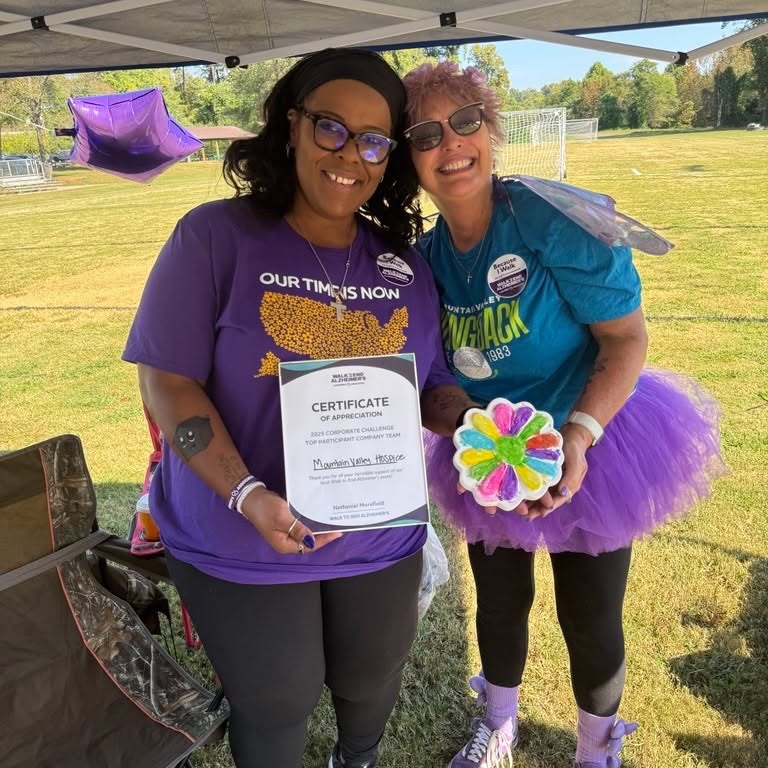
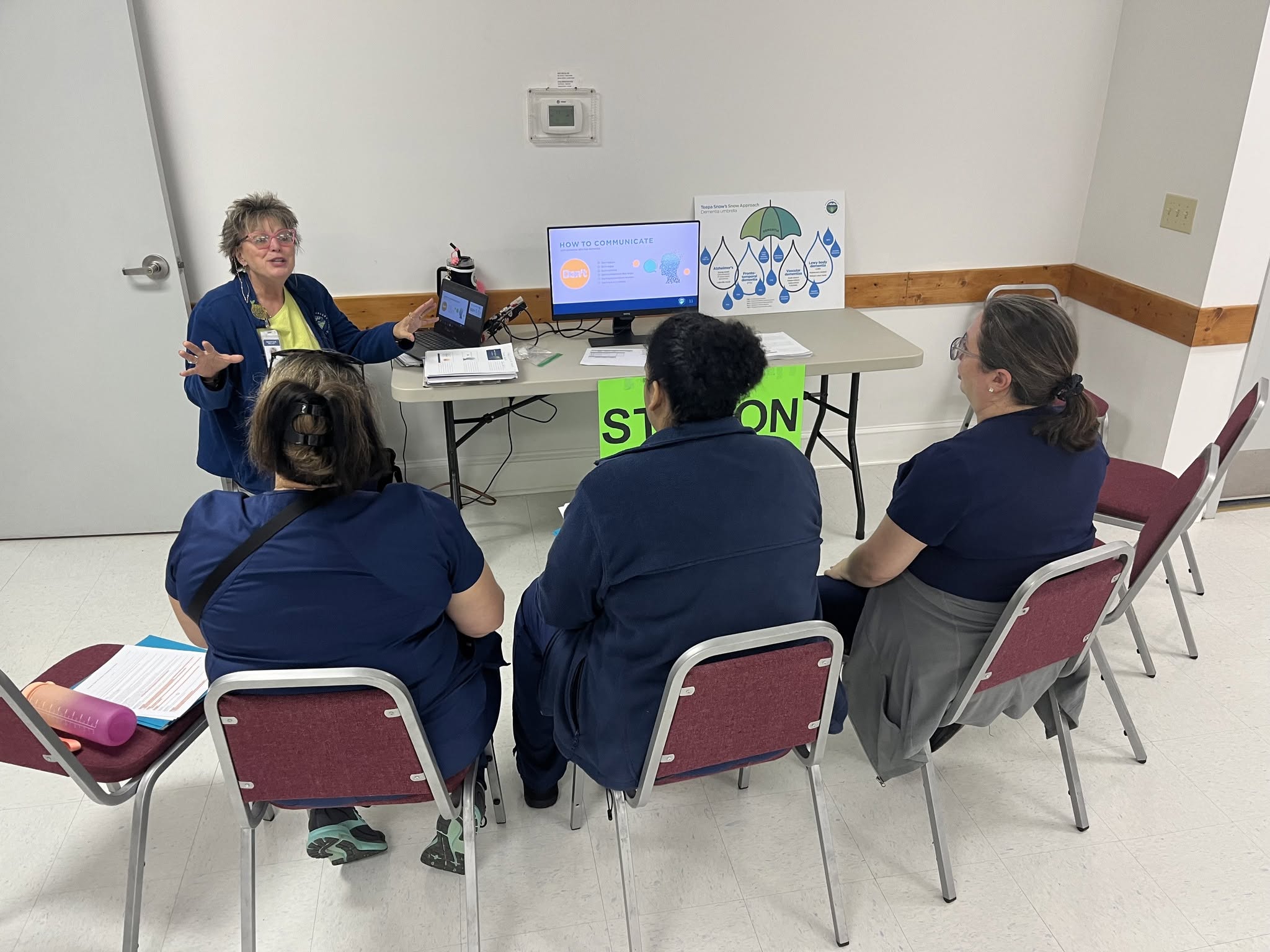
Mountain Valley is proud to have two Licensed Dementia Educators, Kelley Tolbert-Holbrook and Christy Joyce-Williams, who provide caregiver support and dementia education throughout the communities we serve. Using Teepa Snow’s Positive Approach to Care®, they help caregivers, families, and healthcare professionals better understand how dementia changes the brain and how those changes can affect communication and behavior.
Through educational events, practical strategies, and hands-on techniques, Kelley and Christy help caregivers respond with greater patience, compassion, dignity, and connection. Their goal is to help families recognize that behaviors that may seem challenging are often a form of communication and to provide tools that support more meaningful interactions with people living with dementia.
For Kelley, this work is also personal. Having experienced her own mother’s journey with late-onset dementia, she understands the challenges families face and the value of having education, encouragement, and support along the way. Together, Kelley and Christy work to help caregivers and emergency first responders feel better equipped to provide care while preserving respect, purpose, dignity, and meaningful connection.
“Until there’s a cure, there’s care.”
– Teepa Snow, Dementia Care Specialist
Dementia care is still about living
Advanced dementia can change how a person communicates with the world, but it does not change their need for dignity, comfort, belonging, and human connection.
Hospice care is not about giving up on someone with dementia. It is about asking a different set of questions: What brings comfort? What causes distress? What matters to this person and this family? How can we make today as meaningful and comfortable as possible?
That is where hospice can make a difference.
At Mountain Valley, our mission is to create the best experience for every patient, every family, every time. For families living with dementia, that means meeting each person where they are, listening closely, adapting as needs change, and helping make every moment matter.
If you are wondering whether hospice or palliative care may be appropriate for someone you love, you do not need to have all the answers before reaching out. Mountain Valley serves families throughout North Carolina and Virginia, and our team can help you understand your options.
Call (336) 789-2922 or explore Mountain Valley’s care options to start a conversation.